RSMS Documentation
What tables are used in RSMS
Why we only have 293 river stations in RSMS
From the Cascade Model we got a set of stations that were at specific River and Tributary miles. This is the Basis for the RMI table. Though we now use the HEC_RAS Model we picked River River stations near the old Cascade river stations when we were migrating over. This gives us an even 400 stations.
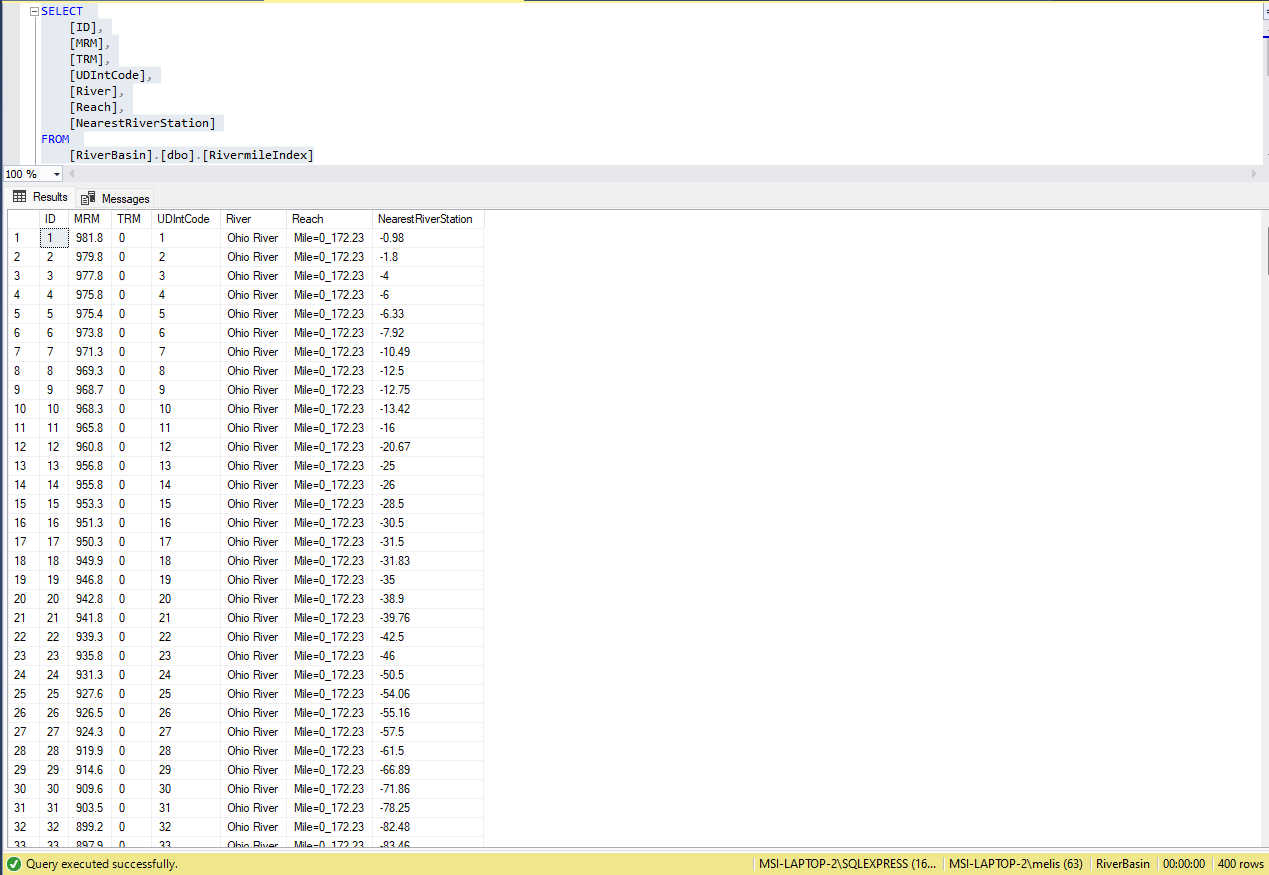
As you can see there are 400 river stations. However there are some river stations that were in Cascade that are not in HEC-RAS so we filter for the river stations that do have data. Also we are not showing the Mississippi river. This is because while we do have the data as the ohio river is a tributary of the Mississippi river and not the other way around the River is not handled well. (It involves breaking the mississippi into 2 parts upper and lower mississippi. It is complicated)
The rivers we are using are with HEC_RAS are as follows
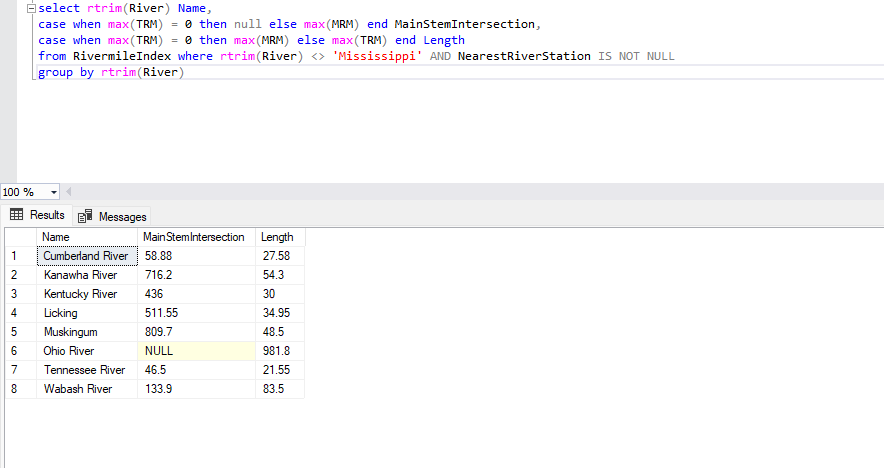
This brings down the number of rows from 400 to 293
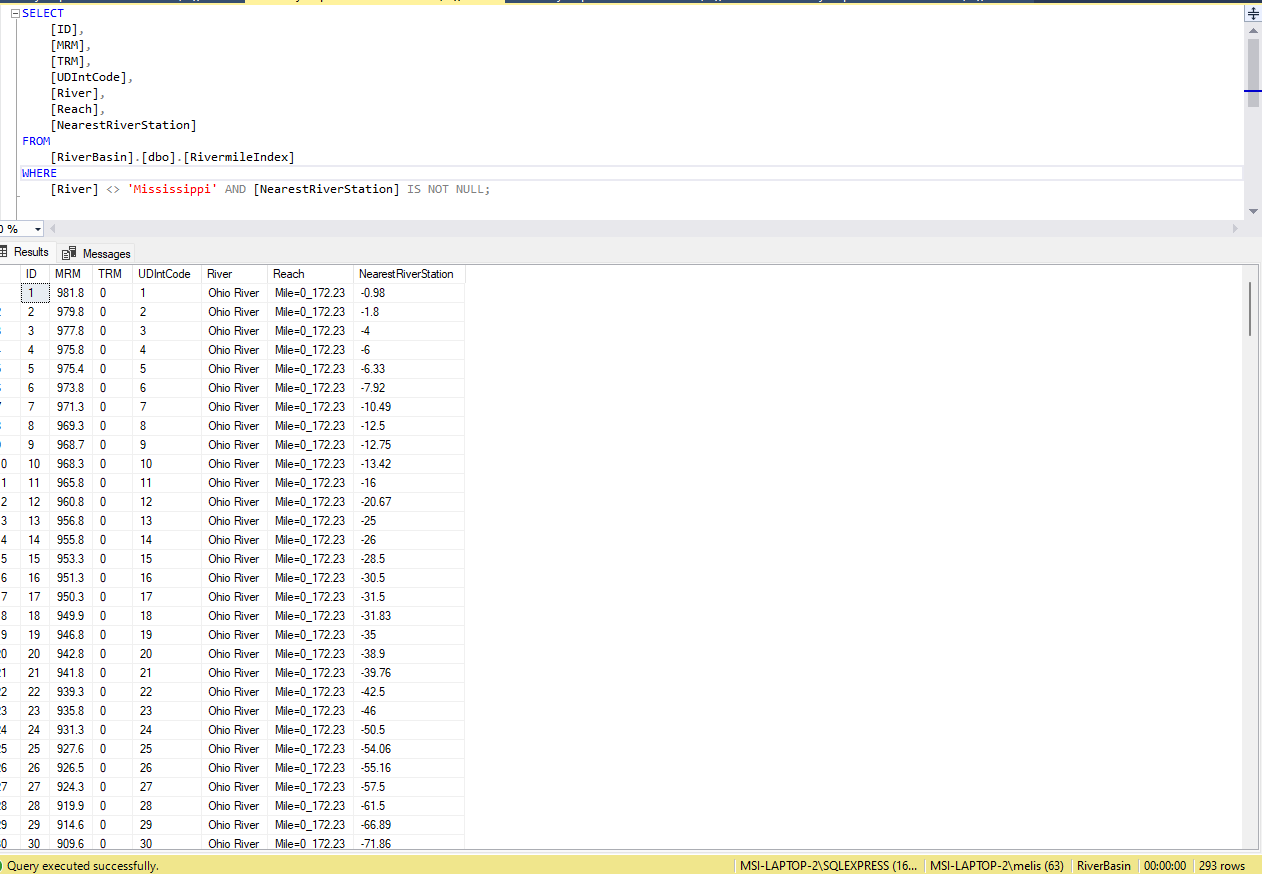
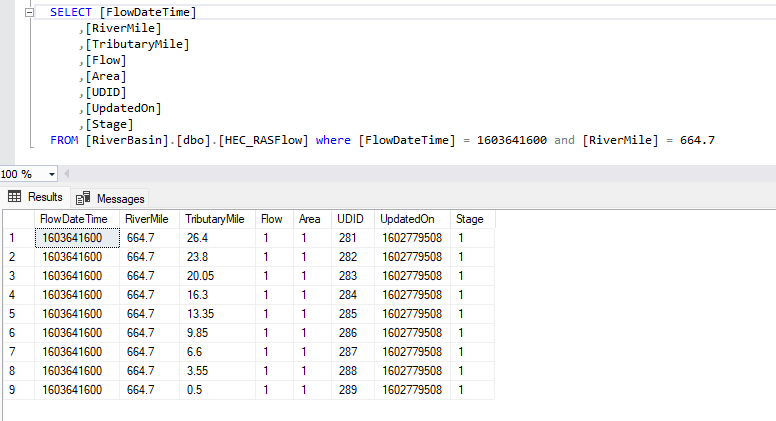
The values of the Tributaries that are not in the HEC_RAS Model are 1.
Why we only have 6 hrs time steps in RSMS
Again this is an artifact of the change over from Cascade to HEC_RAS. Cascade was 6 hr data.
The query that is being used is shown in the block below:
private const string InsertOrUpdateFlowsQueryHECRAS =
@"UPDATE HEC_RASFlow SET Flow = @Flow, UpdatedOn = @UpdatedOn, Area = @Area, Stage = @Stage
WHERE FlowDateTime = @FlowDateTime AND UDID = @UDID IF @@ROWCOUNT = 0 INSERT INTO HEC_RASFlow
(RiverMile, TributaryMile, Flow, Area, FlowDateTime, UDID, UpdatedOn, Stage)
VALUES (@RiverMile, @TributaryMile, @Flow, @Area, @FlowDateTime, @UDID, @UpdatedOn, @Stage)";
There is no clear location as to where we are turning the 1 hr data into 6 hr data. In fact some of the comments read as if HEC-RAS is 6 hr data when we know it is 1 hr data.
for instance is comment in the
 /// <summary>
        /// Get FTPLT data for either a mainstem or tributary river. This method directly queries the database.
        /// If the flow source contains flow data that occurs more frequently than "daily", then the flow data returned is averaged to occur daily.
        /// For example, HEC_RAS data occurs 4 times per day, but will be returned as averaged values occurring once per day at 00:00:00.
        /// It always pulls a from beginDate at 00:00:00 through the endDate at 23:59:59 (GMT).
        /// </summary>
        /// <param name="tableName"></param>
        /// <param name="pStartTime"></param>
        /// <param name="pEndTime"></param>
        /// <param name="pRiverMile"></param>
        /// <param name="pTribMile"></param>
        /// <param name="pZoneInfo"></param>
        /// <param name="isMainstem">boolean representing if the query is for a mainstem river</param>
        /// <returns></returns>
        public System.IO.MemoryStream GetFTPLT(string tableName, DateTime pStartTime, DateTime pEndTime, double pRiverMile, double pTribMile, TimeZoneInfo pZoneInfo, bool isMainstem)